
Our Story
_edited.jpg)
Where it began
Like the vast majority of Jews in the United States, our team has long been part of broader movements for progress. Few communities have been as consistently engaged in the fight for justice. As a small minoritized group, here and globally, Jews understand that coalition work is essential to protecting civil rights.
Our co-founder and CEO, Oren Jacobson, has spent nearly two decades in this work. He helped build one of the country’s largest leadership development organizations in the progressive movement and later founded Men4Choice to mobilize male allies in the fight for abortion rights and access. Through this work, he partnered with leaders across the country deeply committed to justice and social change.
As early as 2014, he began noticing a shift in how conversations around Israel and Palestine were unfolding. Conversations among people who otherwise shared values and goals would quickly become polarized. Over time, ideas and rhetoric that undermined Jewish inclusion and safety were increasingly going unnoticed or unaddressed. Other Jewish leaders privately shared similar concerns, describing exclusion, both formal and informal, from spaces they had long been a part of. Many of those leaders would later help launch Project Shema.
Where we are now
These trends have become more visible in recent years, particularly in the wake of October 7, 2023, the deadliest day for Jews since the Holocaust, and the subsequent global rise in antisemitism. For many, this moment is especially difficult to navigate while holding both the reality of rising antisemitism and the devastation in Gaza simultaneously.
At the same time, these dynamics were taking a broader toll. Trust eroded. Dialogue broke down. Non-Jewish peers and leaders saw the strain, but felt uncertain of how to engage constructively without causing further harm. The coalitions and institutions these movements depend on were being weakened.
It became clear that this was not simply about disagreement—or even primarily about intent. There was a lack of shared context, language, and skills to engage with empathy across differences. The social and professional costs of engaging were high, making it easier to stay silent, avoid the conversation, or default to rigid positions.
Project Shema was created to address two interconnected challenges shaping this moment. First, rising global antisemitism, particularly the ways anti-Jewish ideas and biases travel alongside discourse around Israel and Palestine. Second, the ways these conversations were fracturing diverse coalitions and institutions committed to progress and pluralism.

What we do
The need for this work continues to grow. In an increasingly polarized environment, leaders face internal conflict, external pressure, and competing priorities while trying to stay mission-aligned. Without the right support, the default is often avoidance, reactivity, or decisions that unintentionally deepen division. These challenges are not receding—they are becoming more complex, visible, and consequential.
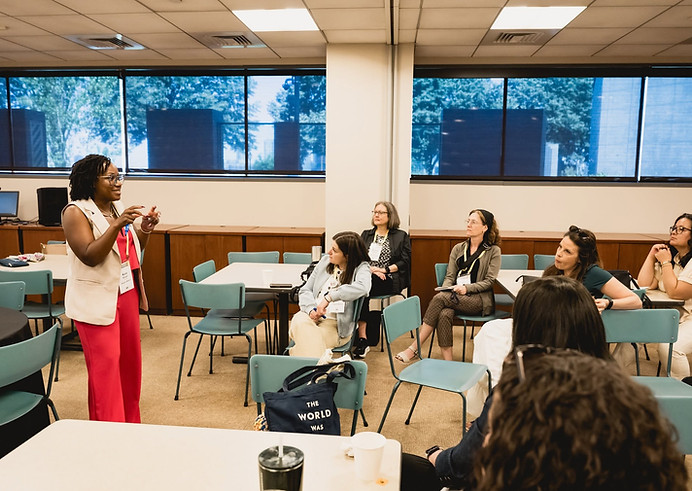
Rather than focusing primarily on labeling people or rhetoric as anti-Jewish, the organization focuses on building capacity. We help people better understand Jewish identity and concerns, while equipping leaders with the skills to engage thoughtfully across difference. Our work includes clear, accessible education on antisemitism, grounded in historical context, contemporary dynamics, and the ways anti-Jewish ideas can show up in discourse and organizational life.
Project Shema partners closely with organizations, listening first, then working alongside leaders to provide practical frameworks and support. Our goal is to move leaders from uncertainty to having the clarity, confidence, and resources to act. We support organizations in navigating how ideas and dynamics arise, and how to respond in ways that strengthen inclusion and safety.
Our Principles
We are guided by these principles, and seek to embed them in all the work we do
01
We believe in relational organizing, not transactional coalition building
We believe in relational organizing, not transactional coalition building. Relationships are two-way streets and are imperfect. Relationships allow space for failure so long as there is genuine accountability and commitment to growth.
02
We believe engagement requires listening and understanding
We believe productive engagement across communal lines requires hearing each other's voices and understanding each other's concerns, as they exist today, in order to build and/or restore trust.
03
We seek to create understanding within and about our community
We seek to ensure our community understands the concerns of others and communicates our concerns in ways that can be better understood by those who don't know our full history.
04
We believe in fighting antisemitism wherever it occurs
While the immediate threat antisemitism poses is not equal in all spaces, we must fight it regardless of which political party or community it comes from. We must also distinguish between a lack of awareness or understanding and actual anti-Jewish bigotry, and respond accordingly.
05
We believe fighting antisemitism requires fighting white supremacy
We believe our community must fight against white supremacy in America. While antisemitism isn't limited to one community, we must recognize that antisemitism is an animating force of modern white supremacist movements, that it presents a uniquely dangerous threat, and that as white supremacy rises so too will antisemitism. We must stand up for all who may be attacked by these forces.
07
We don't tolerate demonization or dismissal of anyone's lived reality
We do not tolerate any attempt to demonize, delegitimize, or erase the narratives, history, trauma, and lived reality of marginalized and historically targeted communities.
06
We reject the notion you must either support Israel or Palestine
We reject the notion that one must either support Israel or Palestine. We long for a future that honors and protects the dignity, national aspirations, and individual and collective wellbeing of Palestinians and Israelis. The very foundation of a mutually agreeable solution requires honoring the trauma, needs and rights of both peoples.
08
We approach this work with humility
We recognize that the status quo creates structural barriers which deny Palestinians dignity, safety, and many fundamental rights. And, we recognize the real, present, and persistent threats to the life of Jews in Israel and around the world. We understand that fully reconciling these inherent contradictions is incredibly difficult.